Blog

  • Sayville Real Estate Market Update: A Balanced Shift Creating Opportunity

    Sayville Real Estate Market Update: A Balanced Shift Creating Opportunity

    The Sayville real estate market has shown noticeable changes over the past few months. When we compare the month-to-month and year-over-year data, we see a market that is slowly moving toward balance. Inventory has increased, pricing has adjusted after a strong February, and buyer activity remains steady. These shifts are important because they create opportunities for both buyers and sellers who approach the market with the right strategy.

    One of the biggest changes is the increase in available homes. The number of homes on the market has grown, and the months supply of inventory has also risen. While inventory is still relatively low, buyers now have more options than they did earlier in the year. This does not signal a slowdown, but rather a healthier pace. A slight increase in inventory often reduces pressure while still maintaining strong demand.

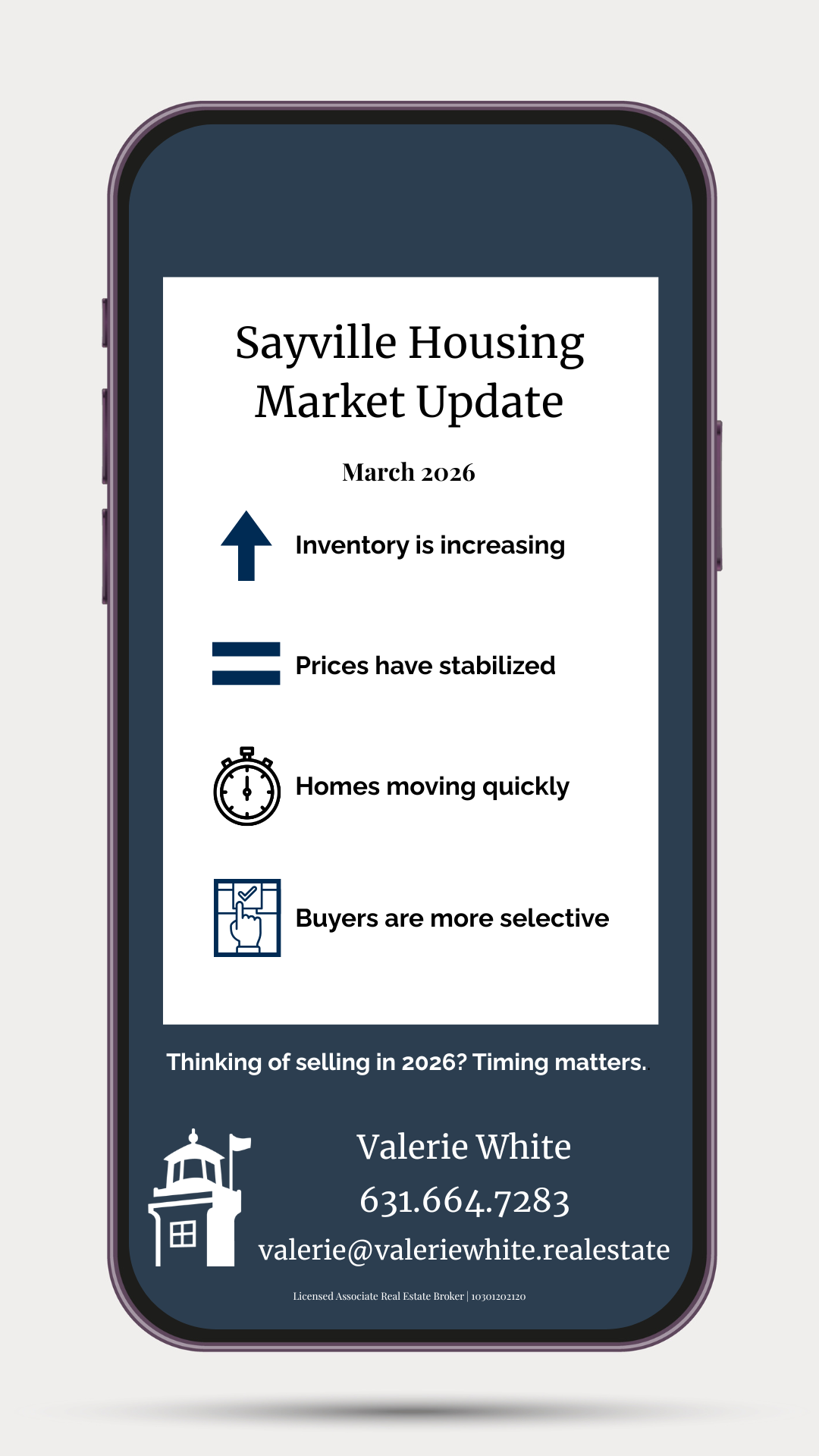
    Highlight: Inventory is rising, but the market still favors well-prepared sellers.

    Pricing trends also tell an interesting story. Average and median sale prices peaked in February and then softened in March. This type of movement is normal and often reflects the mix of homes that sold during that period. Higher-end homes can push averages up, while a different mix in the following month can bring them down. Overall, pricing remains strong and stable, even with this adjustment.

    Highlight: Prices have stabilized after a peak, creating more realistic expectations for both buyers and sellers.

    Another positive sign is that homes are still selling relatively quickly. Days on market dropped compared to earlier in the year, which shows that motivated buyers are still active. When homes are priced correctly and presented well, they continue to attract strong interest. This reinforces the importance of preparation and strategy.

    Highlight: Well-priced homes are still moving quickly.

    For sellers, this market continues to offer opportunity, but success depends more on proper positioning. Buyers are being thoughtful and selective. Overpricing can lead to longer market time, while homes that are staged, photographed professionally, and priced correctly tend to perform best. Sellers who prepare their homes and follow current market data are still seeing solid results.

    What this means for sellers:
    This is still a strong selling environment with limited competition. However, pricing correctly from the start and presenting your home well are more important than ever. Buyers are comparing options, and homes that stand out are the ones that sell faster and closer to asking price.

    For buyers, the shift toward balance is encouraging. With slightly more inventory and stabilized pricing, buyers may experience less pressure and fewer bidding wars. This allows for more thoughtful decisions. Buyers should still be prepared, as desirable homes continue to sell quickly, but the pace feels more manageable than earlier in the year.

    What this means for buyers:
    You may have more negotiating power and more choices. This is a great time to explore opportunities while staying ready to act when the right home appears. Being pre-approved and working with a clear plan will help you move confidently.

    Overall, the Sayville market is transitioning into a more balanced and stable environment. Sellers still benefit from limited inventory, while buyers gain more opportunity and flexibility. This type of market supports thoughtful decisions and strong outcomes on both sides. With the right guidance and preparation, both buyers and sellers can move forward with confidence and clarity.

    If you’re thinking about making a move, whether buying, selling, or exploring financing options, having the right guidance can make all the difference. I help clients navigate both real estate and mortgage decisions so you have a clear, confident path from start to finish. If you’d like to talk about your goals, understand your home’s value, or review your buying power, I’m here to help. Reach out anytime for personalized support tailored to your situation. Together, we can create a strategy that protects your interests and helps you move forward with confidence.

  • How Tech and AI Are Reshaping the Long Island Real Estate Experience in 2026

    If you’ve been watching the real estate market on Long Island, NY, you’ve probably noticed a shift. Today’s most successful real estate agents are no longer just experts in negotiation and neighborhood knowledge, they’re also skilled in leveraging advanced technology and AI-driven tools to give their clients a real edge.

    In 2026, the real estate process has evolved far beyond flyers and open houses. I personally utilize cutting-edge systems, including AI-powered market analysis, predictive lead generation, automated client communication, and smart digital marketing platforms to help buyers and sellers make faster, more informed decisions. These tools allow me to track micro-local trends across Long Island, strategically price listings, and ensure that every property I market reaches the right audience at the right time.

    But here’s what hasn’t changed: real estate on Long Island is still deeply personal. Whether you’re buying a first home in Smithtown, selling in Huntington, or relocating to the South Shore, it takes more than data to close a successful deal. You need a partner who knows how to read the market and read the room. Someone who can interpret the numbers, but also understand your goals.

    That’s where the balance comes in. Technology enhances the process, but experience, strategy, and local relationships are what drive results.

    Whether you’re exploring homes for sale in Nassau County or thinking of listing in Suffolk County, the combination of tech-enabled service and trusted expertise is what sets my approach apart.

    Curious how smart tools can streamline your real estate journey? Let’s connect. I’ll show you how modern systems, hyper-local insight, and a people-first approach can give you the competitive edge in the Long Island market.

  • Mortgage Rates, Affordability & What Today’s Pending Sales Are Telling Us

    For many Long Islanders, the question isn’t if they want to buy or sell a home, it’s when. And in a market where mortgage rates, affordability, and pending home sales are all shifting, timing has never been more important. Understanding these trends is the key to making confident, informed decisions in 2026.

    After a turbulent few years, mortgage rates have started to level out, but they’re still notably higher than buyers were used to during the pandemic boom. This has cooled activity in some areas, especially among first-time buyers who are recalculating monthly budgets and weighing long-term affordability. According to recent reports, pending home sales have dropped to the lowest level on record outside of early pandemic months, signaling hesitation but not disinterest. Buyers are still active, just more strategic.

    In fact, we’re seeing a more informed buyer emerge. Someone who’s watching not just rates, but job growth, inflation, and inventory trends. And there’s good news on the horizon: while prices remain elevated, affordability is expected to improve modestly as wages rise and sellers return to the market with more realistic pricing. On Long Island, where demand has always outpaced supply, even a small shift in affordability can have a big impact on sales activity.

    For sellers, this isn’t a reason to panic. It’s a reason to price smart. And for buyers, it’s a chance to prepare while competition is more balanced.

    Thinking of making a move in 2026? Let’s talk strategy. Whether you’re buying your first home or preparing to list, I can help you navigate the numbers and negotiate from a position of strength.

  • Why This Is the Ideal Real Estate Market to Downsize, Upgrade, or Step Into Your Next Chapter

    There is a noticeable shift happening in today’s real estate market, and for many homeowners and buyers, it is creating meaningful opportunity.

    If you are considering downsizing, upgrading, or moving forward into a new chapter of life, this market offers something especially valuable: time to think clearly. Less urgency. More balance. And the ability to make decisions based on where your life is now, not where it used to be.


    A Market That Supports Thoughtful Decisions

    Today’s real estate market rewards preparation and intention. In many areas, pricing has stabilized and inventory is more balanced than it was in recent years. Buyers are approaching purchases with greater care, and sellers are seeing more informed, motivated interest rather than rushed competition.

    This creates space to plan, ask questions, and negotiate with confidence. Instead of reacting to pressure, people are making moves that align with long term goals and lifestyle priorities.


    Why Downsizing Makes Sense Right Now

    For homeowners ready to simplify, downsizing can be both financially smart and emotionally freeing in this market. Larger homes continue to attract strong buyer demand, which allows many sellers to leverage equity while transitioning into spaces that better support their current needs.

    At the same time, smaller homes, condos, and lifestyle focused properties are becoming more available. This gives downsizers real choice, not forced compromise. Downsizing today is less about giving something up and more about creating ease, flexibility, and peace of mind.


    Upgrading Without the Pressure

    If your current home no longer fits your family, work, or daily life, this market also supports thoughtful upgrades. With fewer bidding wars and more reasonable timelines, buyers are often able to take time, complete inspections, and negotiate terms that protect them.

    That breathing room allows upgrades to feel strategic rather than stressful. It gives buyers the ability to focus on fit, function, and long term value instead of rushing into a decision that does not fully serve them.


    When Moving Forward Is About Life, Not Just a House

    Many moves are driven by more than square footage or price. Some are tied to life transitions, changing family needs, or the desire for a lifestyle that better supports health, relationships, or future plans.

    This market allows those decisions to be made with care. It gives people the space to honor what a home has meant while also making room for what comes next. That balance is often what leads to the most confident and satisfying moves.


    The Importance of Steady Guidance Right Now

    The most successful transitions in today’s market are guided by clear strategy and honest information. With the right support, it is possible to navigate timing, pricing, and logistics while also protecting peace of mind.

    Understanding your options and your numbers changes everything. Confidence replaces overwhelm, and decisions feel grounded instead of rushed.

    If you are thinking about downsizing, upgrading, or exploring what your next chapter could look like, a conversation can bring clarity. You do not need to have everything figured out to take the first step. When you are ready, we can talk through your options and create a plan that supports where you are headed, with care, professionalism, and confidence.

  • What a Potential Fed Rate Cut Really Means for Long Island Buyers and Sellers

    The Federal Reserve is once again in the headlines—this time, signaling a potential 25 basis point rate cut. But what does that actually mean for you if you’re thinking about buying or selling a home on Long Island?

    Let’s break it down in simple terms—and more importantly, explore how this shift could impact your next move in our local real estate market.


    First, What Is a Basis Point?

    A basis point is just a financial term that equals 1/100th of a percent. So, if the Fed cuts interest rates by 25 basis points, that’s a 0.25% decrease.

    While that might seem minor, even small movements in interest rates can have a big impact on mortgage rates, affordability, and overall buyer demand—especially here on Long Island, where prices are already elevated compared to national averages.


    What Happens When the Fed Cuts Rates?

    It’s important to understand that the Fed doesn’t directly set mortgage rates. Instead, they influence short-term interest rates, which affect borrowing costs across the board. When the Fed cuts rates, lenders often follow suit, making home loans more affordable.

    This can lead to:

    • Lower mortgage payments for buyers
    • Increased buyer activity as affordability improves
    • More competition for listings, especially in lower to mid price ranges

    What This Means for Long Island Buyers

    If you’re planning to buy a home on Long Island, a 0.25% drop in mortgage rates can:

    • Increase your purchasing power—you may be able to afford more home for the same monthly payment
    • Lower your long-term interest costs—saving you thousands over the life of the loan
    • Improve your timing—if you’ve been on the fence, this could be your window to make a move before competition heats up

    Pro Tip: Lock in a rate early. If this rate cut triggers a surge in buyer activity, prices could edge up in response to demand. Acting sooner may put you in a stronger negotiating position.


    What This Means for Long Island Sellers

    For homeowners thinking about listing, a Fed rate cut can be excellent news. Here’s why:

    • More buyers in the market means greater demand for your property
    • Potential for faster sales and stronger offers, especially if your home is well-priced and move-in ready
    • Greater confidence among move-up buyers, who can now afford the next step with lower financing costs

    However, keep in mind: timing is everything. If inventory begins to rise alongside buyer activity, competition between sellers could return. Pricing strategically and marketing professionally are still key.


    Long Island Market Outlook

    With continued low inventory across Nassau and Suffolk Counties, even a small rate cut could magnify demand. That means more multiple-offer situations, quicker sales, and increased urgency among buyers.

    Whether you’re a buyer trying to secure your dream home, or a seller aiming to maximize your return, working with a local expert who understands Long Island’s micro-markets is more important than ever.


    The Bottom Line

    A 25 basis point rate cut might sound like Wall Street jargon—but in real terms, it could make a meaningful difference in your real estate journey. In a market as competitive and dynamic as Long Island’s, even a quarter-point can shift affordability, demand, and strategy.

    If you’re thinking about making a move, let’s talk. I’ll help you navigate the numbers, the timing, and the opportunity—so you can make confident decisions in any market.


    📲 Thinking about buying or selling on Long Island? Let’s connect. I’m here to guide you every step of the way.

  • Tight Inventory Continues to Define the Long Island Real Estate Market

    If you’ve been paying attention to the Long Island real estate market, one trend continues to stand out: tight inventory. Simply put, there are still more buyers than available homes in many areas and that imbalance is shaping nearly every transaction.

    While market conditions have evolved over the past few years, limited housing supply remains a defining factor across both Nassau and Suffolk counties. Understanding why inventory is tight, and how it affects buyers and sellers, can help you make smarter, more confident decisions.

    Why Is Inventory Still So Low?

    Several factors are contributing to the ongoing shortage of homes on Long Island:

    • Homeowners are holding onto low mortgage rates. Many sellers refinanced or purchased when rates were historically low, making it financially difficult to give that up.
    • Limited new construction. With space constraints, zoning challenges, and rising construction costs, new housing hasn’t kept pace with demand.
    • Life transitions are happening more slowly. Downsizing, relocating, or selling a long-time family home often comes with emotional and logistical hurdles, causing some homeowners to delay their move.

    The result? Fewer homes coming to market, even as buyer interest remains strong.

    What Tight Inventory Means for Buyers

    For buyers, low inventory often translates to fewer choices and increased competition, particularly in desirable neighborhoods and school districts. Well-priced, move-in-ready homes tend to attract strong interest quickly.

    That doesn’t mean buyers are without options, but it does mean preparation matters more than ever. Buyers who understand their financing, move decisively, and work with local expertise are better positioned to succeed, even in a competitive environment.

    What Tight Inventory Means for Sellers

    For sellers, limited inventory can work in your favor. With fewer homes available, well-prepared listings often command strong attention, shorter days on market, and favorable terms.

    However, strategy still matters. Pricing correctly, presenting the home thoughtfully, and timing the market appropriately are key to maximizing results. Tight inventory doesn’t eliminate the need for careful planning, it simply raises the importance of it.

    A Market That Rewards Clarity and Guidance

    When inventory is tight, real estate decisions can feel high-pressure. That’s why having clear guidance and a thoughtful strategy is essential. Whether you’re buying, selling, or just exploring your options, understanding the market landscape allows you to move forward with confidence rather than urgency.


    Ready to Talk About Your Next Move?

    If you’re wondering how tight inventory impacts your specific situation, or how to position yourself successfully in today’s Long Island market, I’m here to help. Let’s have a conversation about your goals, your timeline, and the smartest path forward.

    📞 Reach out anytime to schedule a personalized consultation.
    You don’t have to navigate this market alone—I’ll guide you every step of the way.

  • How Much House Can I Really Afford in 2026? (What Online Calculators Don’t Tell You)

    If you’ve typed “How much house can I afford?” into an online calculator lately, you’re not alone. It’s one of the most searched housing questions — especially heading into 2026.

    But here’s the honest truth:
    Most affordability calculators only tell part of the story.

    They’ll give you a number.
    They won’t tell you what that number feels like in real life — or whether it actually protects your peace of mind.

    Let’s talk about what affordability really means in 2026, including one of the biggest missing pieces: rising insurance costs and how they affect your debt-to-income ratio (DTI).


    The Short Answer: You Can Usually Afford Less Than the Calculator Says

    Most online calculators focus on:

    • Purchase price
    • Interest rate
    • Estimated taxes
    • Principal & interest

    What they often don’t fully account for:

    • Rapidly rising homeowners insurance costs
    • Insurance volatility by location
    • HOA increases
    • Lifestyle expenses
    • How lenders actually calculate DTI

    That’s how buyers end up “approved” for a payment that feels tight month after month.


    What Affordability Really Means in 2026

    In today’s market, affordability isn’t just about qualifying — it’s about sustainability.

    A home is affordable when:

    • Your monthly payment fits comfortably into your life
    • You can still save, travel, and handle surprises
    • You’re not stressed every time an unexpected bill shows up

    That’s a very different calculation than what most online tools provide.


    The Big Factor Many Buyers Miss: Rising Insurance Costs

    Homeowners insurance has become one of the fastest-growing housing expenses, especially in:

    • Coastal areas
    • Fire-prone regions
    • Storm-affected states
    • Condo buildings with shared master policies

    In many markets, insurance premiums have increased 20–40% (or more) in just a few years.

    Why This Matters for Affordability

    Insurance isn’t optional — and lenders include it in your debt-to-income ratio (DTI).

    If your insurance premium increases:

    • Your monthly housing payment increases
    • Your DTI increases
    • Your borrowing power may decrease
    • Your long-term affordability may be affected

    This is especially important for condos and townhomes, where:

    • HOA master insurance costs are rising
    • Those increases are passed on to homeowners through higher dues

    Online calculators rarely reflect this accurately.


    How Debt-to-Income Ratios Really Work (And Why Insurance Matters)

    Your DTI is the percentage of your gross monthly income that goes toward debt payments.

    Most lenders look at:

    • Front-end DTI (housing costs only)
    • Back-end DTI (housing + other debts)

    Housing costs include:

    • Principal & interest
    • Property taxes
    • Homeowners insurance
    • HOA dues

    So when insurance premiums rise, your DTI rises too — even if nothing else changes.

    That means:

    • A home that fits today may not fit as comfortably tomorrow
    • Stretching to the top of your approval range leaves little buffer

    The Difference Between “Approved For” and “Comfortable With”

    This is where buyers often get tripped up.

    You may be approved for a payment that:

    • Limits your lifestyle
    • Reduces flexibility
    • Makes future increases stressful

    A better approach is to choose a payment that:

    • Leaves room for insurance and tax increases
    • Allows for savings and enjoyment
    • Feels steady, not stressful

    In other words: affordability should protect your future, not just your purchase.


    Questions Smart Buyers Are Asking in 2026

    Instead of only asking “How much can I afford?”, consider:

    • How much do I want my housing payment to be?
    • What happens if insurance increases again?
    • Will this payment still feel okay in 2–3 years?
    • Does this choice support the life I want outside my home?

    Those answers matter more than any calculator result.


    A More Realistic Way to Determine Your Budget

    A thoughtful affordability conversation includes:

    • Conservative insurance estimates
    • Real HOA projections
    • Lifestyle goals
    • Emergency savings planning
    • Long-term flexibility

    This is where working with a knowledgeable lender and advisor makes a real difference — someone who looks beyond approval numbers and helps you plan responsibly.


    Final Thought: Affordability Is About Peace of Mind

    Buying a home is a big milestone and it should feel empowering, not overwhelming.

    In 2026, the most successful buyers aren’t the ones who max out their budget.
    They’re the ones who choose a home that fits their life, their goals, and their future.

    If you’re asking these questions, you’re already on the right track.


    Because the best home isn’t the most expensive one you can buy it’s the one that lets you live well after you move in.